The Evolution of Dubbing in European Media: A Linguistic and Cultural Journey
Posted on November 28, 2024 by George
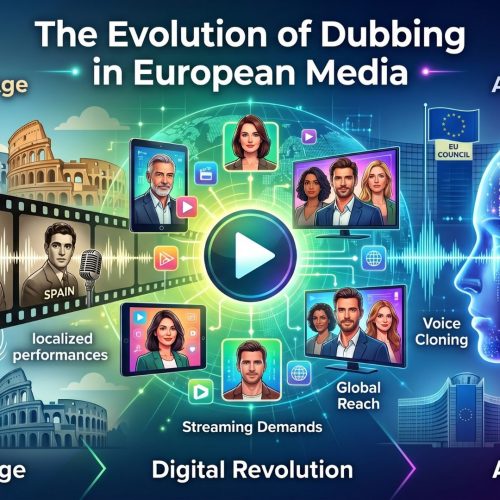
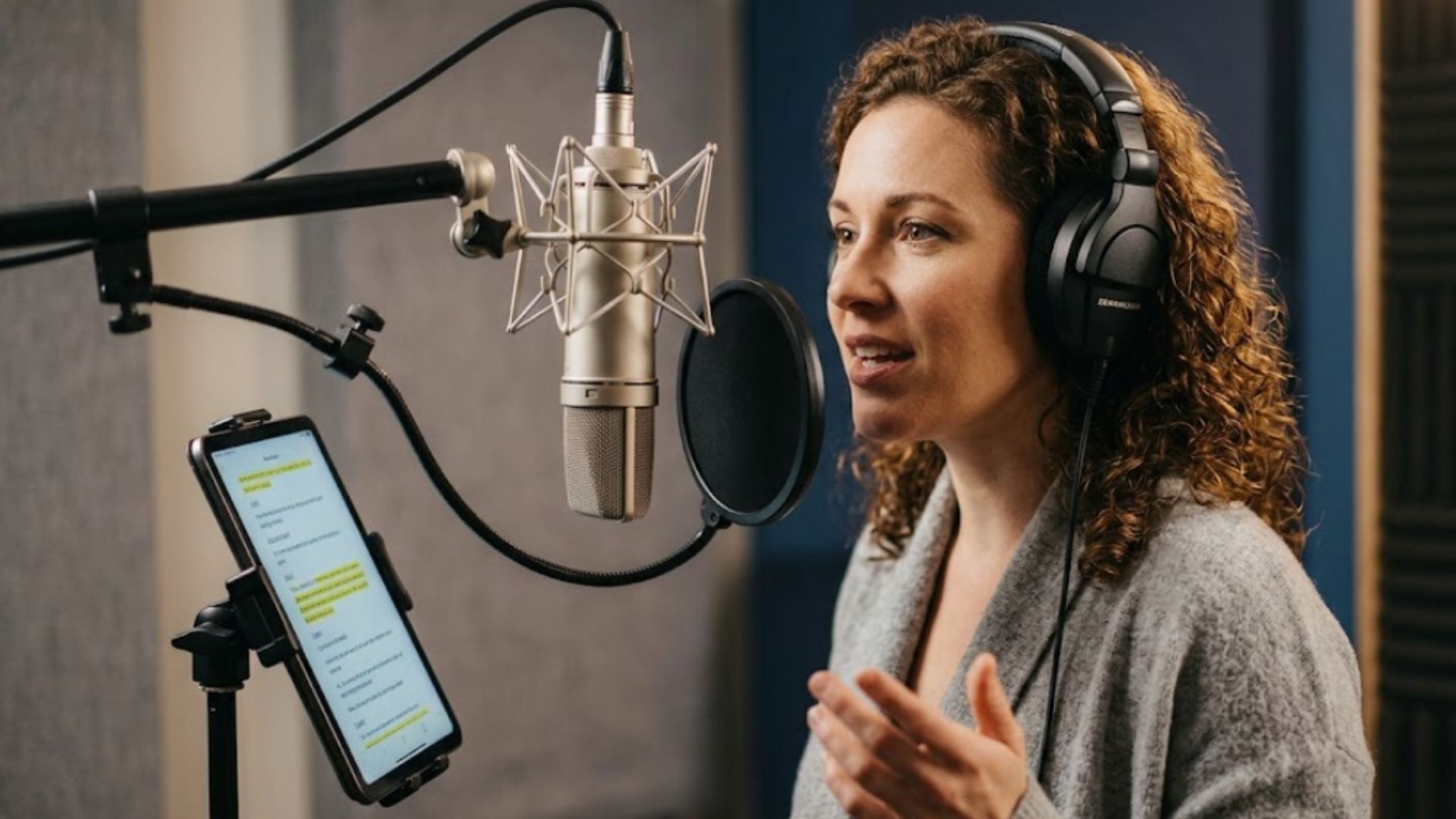
The landscape of European cinema and television is a polyglot tapestry, woven together by a complex history of translation. While subtitling has its staunch defenders, it is the art of dubbing—the process of replacing the original vocal track with a localized version—that has fundamentally shaped the media consumption habits of millions across the continent. From the early experiments of the “talkies” to the sophisticated AI-driven workflows of 2024, the evolution of dubbing in Europe is a story of national identity, political influence, and technological triumph.
The Birth of the “Talkies” and the Language Barrier
In the silent film era, cinema was truly universal. Intertitles could be easily swapped out for different languages, allowing a film produced in Berlin to be understood in Paris or Rome with minimal effort. However, the advent of synchronized sound in the late 1920s created a sudden, formidable barrier.
Initially, studios attempted Multiple-Language Versions (MLVs). This involved filming the same scene several times with different casts speaking different languages. It was an expensive, logistical nightmare. The industry needed a more efficient solution, leading to the birth of rhythmic phonetics and synchronization. By the early 1930s, the “Dubbing vs. Subtitling” divide began to take root in Europe, largely dictated by the size of the domestic market and the prevailing political climate.
The “Big Four”: Dubbing as a Tool for Sovereignty
Europe famously split into two camps: the “subtitling countries” (such as the Netherlands, Scandinavia, and Portugal) and the “dubbing countries” (France, Italy, Germany, and Spain). For the latter group—often referred to as the Big Four—dubbing was more than a convenience; it was a tool for linguistic protectionism and national prestige.
- Italy: Under Mussolini, the Italian government banned the screening of films in foreign languages to promote a unified Italian identity. This birthed an elite class of voice actors who became celebrities in their own right.
- Spain: Similarly, the Franco regime utilized dubbing as a means of censorship, allowing the state to rewrite dialogue that was deemed politically or morally subversive.
- France: The French have long viewed dubbing as a way to defend the Francophonie against the “linguistic imperialism” of Hollywood.
- Germany: With a massive domestic audience, Germany developed a highly industrialized dubbing sector that prioritized high-fidelity acoustic reproduction.
As noted in recent industry analyses by The Hollywood Reporter, these historical foundations created a deep-seated cultural preference where audiences in these regions often find subtitles distracting, preferring the immersive, “invisible” experience of a well-executed dub.
The Golden Age of Synchronization
By the mid-20th century, dubbing had evolved into a sophisticated craft. It wasn’t just about translating words; it was about lip-syncing—matching the labial movements of the onscreen actor—and isochrony, ensuring the dubbed line lasted exactly as long as the original.
This era saw the rise of the “exclusive voice.” In many European countries, a specific local actor would become the “official” voice of a Hollywood star. For decades, a German viewer wouldn’t recognize Bruce Willis without the distinct gravelly tones of Manfred Lehmann. This created a unique psychological bond between the audience and the foreign media, making international stars feel like local icons.
Digital Transformation and the Streaming Revolution
The transition from analog tape to digital workstations in the 1990s and 2000s revolutionized the speed and quality of localization. However, the most significant shift came with the rise of global streaming giants like Netflix, Disney+, and Amazon Prime.
Suddenly, the demand for high-quality European content (and the export of American content into Europe) skyrocketed. This “Globalized Era” forced a change in how dubbing was perceived. It was no longer just about the Big Four. Markets that traditionally preferred subtitles began to embrace dubbing for high-budget “event” series to increase accessibility for multi-tasking audiences.
Furthermore, the technical standards became more rigorous. Modern dubbing studios now utilize Dolby Atmos technology to ensure that the localized dialogue sits perfectly within the original soundscape, maintaining the director’s intended spatial audio experience. This level of immersion has narrowed the “quality gap” that once made dubbed versions feel like inferior copies of the original.
The 2024 Frontier: AI and Neural Dubbing
As of late 2024, the industry is navigating its most disruptive period yet: the integration of Artificial Intelligence. The evolution has moved from manual translation to AI-assisted scripts and, controversially, synthetic voice cloning.
Modern developments include:
- Automated Dialogue Replacement (ADR) Enhancement: AI tools can now subtly alter the mouth movements of the original actor to match the phonemes of the dubbed language, a process known as “Visual Dubbing.”
- Voice Preservation: AI allows the original actor’s unique timbre and emotional inflection to be mapped onto the foreign language performance, ensuring that “Tom Cruise” sounds like “Tom Cruise,” regardless of the language he is speaking.
- Localization Speed: What used to take months can now be achieved in weeks, allowing for near-simultaneous global releases.
Despite these advancements, the European dubbing community remains a bastion of human artistry. Labor unions in France and Italy have been vocal about protecting the “soul” of the performance, arguing that while AI can mimic a voice, it cannot yet replicate the cultural nuance and comedic timing of a seasoned human actor.
Cultural Impact: A Unified European Screen?
The evolution of dubbing has done more than just move films across borders; it has fostered a shared European pop culture. Through dubbing, a Spanish series like La Casa de Papel (Money Heist) became a household name in Germany and Poland. It has bridged the gap between the continent’s diverse linguistic groups, allowing stories to travel freely while respecting the local language of the viewer.
Summary Table: Evolution of Dubbing Techniques
| Era | Primary Method | Goal |
| 1930s-1950s | Early Optical Sound | Basic linguistic comprehension / State censorship. |
| 1960s-1980s | Magnetic Tape / ADR | Perfecting lip-sync and “exclusive” star voices. |
| 1990s-2010s | Digital Workstations | Higher acoustic fidelity and faster turnaround. |
| 2020-Present | AI & Neural Dubbing | Visual sync (Deepfake) and original voice cloning. |
Conclusion
From its origins as a crude necessity of the early sound era to its current status as a multi-billion euro high-tech industry, dubbing has remained the invisible engine of European media. It is a testament to the continent’s desire to remain connected without sacrificing its linguistic heritage. As we move further into the decade, the blend of human performance and technological precision will likely make the “language barrier” a thing of the past, ensuring that a story told in one corner of Europe can resonate deeply in every other.…
0