
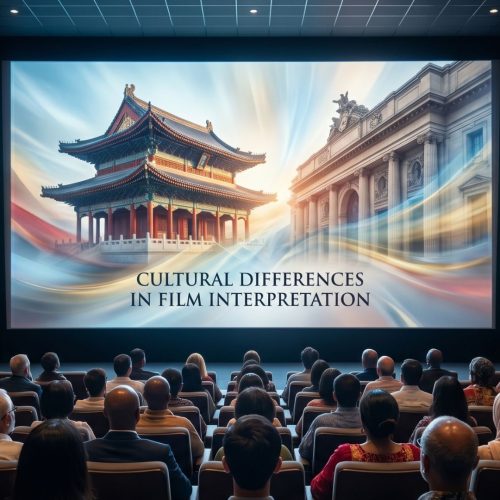
Cinema is often heralded as a “universal language,” yet the way audiences process a single scene can vary wildly across different latitudes. As we move further into 2026, the globalization of streaming platforms like Netflix and MUBI has made international cinema more accessible than ever, but it has also highlighted a fascinating psychological reality: our cultural “software” dictates how we interpret the moving image.
From the weight given to a character’s silence to the way we perceive narrative structure, cultural differences in film interpretation remain a cornerstone of modern media studies.
The Cultural Schema: How We “Read” a Movie
At the heart of film interpretation lies the concept of cultural schemas—mental frameworks that help us organize and interpret information based on our background. A study published in June 2024 explored this by analyzing how Hungarian and Jordanian students interpreted the same silent film (Sanatifar et al., 2024).
The researchers found that while both groups viewed the same visual stimuli, their written narratives diverged based on societal values. The Jordanian participants, coming from a more collectivist culture, frequently emphasized family bonds, societal expectations, and themes of gratitude. In contrast, the Hungarian students displayed more individualistic tendencies, focusing on the protagonist’s pursuit of autonomy and personal dreams (Sanatifar et al., 2024).
This suggests that we don’t just “watch” a movie; we subconsciously edit it to align with our own moral and social architecture. For a deep dive into how these perceptions are evolving in the digital age, the Frontiers in Communication journal provides ongoing research into how global connectivity is hybridizing these regional stories.
Narrative Structure and the “Pace” of Meaning
Western audiences, largely raised on the three-act structure of Hollywood, often expect a linear progression: a protagonist encounters a problem, faces obstacles, and reaches a resolution. However, Eastern cinematic traditions often utilize different narrative beats that can leave Western viewers feeling “lost.”
- Kishōtenketsu: Common in Japanese and Chinese storytelling, this four-act structure lacks a central conflict. Instead, it relies on a “twist” or a change in perspective in the third act.
- The Power of Silence: In many Asian cinemas, “ma” (the space between things) is as important as the dialogue. To a high-context culture, a long, silent shot of a character looking at a tea cup might convey profound grief. To a low-context Western viewer, the same shot might simply feel like “slow pacing.”
The Challenge of Translation and Localization
Interpretation is also heavily influenced by the technical bridge of audiovisual translation. Subtitling and dubbing are not merely linguistic tasks; they are acts of cultural mediation. The way a voice actor conveys emotion or how a translator adapts a joke can fundamentally change a viewer’s emotional connection to the material.
Understanding how language influences media experience is crucial for global distributors, as even a minor shift in tone during localization can alter the audience’s perception of a character’s morality or intent. Research into international film festivals has shown that “lexical gaps”—words or concepts that exist in one culture but not another—often require “cultural substitution.” For example, a subtitler might replace a specific religious idiom with a more general emotional phrase to ensure the international audience feels the same “impact,” even if the literal meaning is lost.
The “Globalized” Viewer of 2026
Is globalization making our interpretations more alike? According to the Global Cinema Federation’s 2026 survey, the answer is a complicated “yes and no.” While 73% of global audiences now see theatrical moviegoing as vital to their wellbeing, their preferences remain segmented (Box Office Pro, 2026).
Younger viewers (under 25) are increasingly adept at “code-switching” between different cultural aesthetics. They might enjoy the fast-paced “branded content” of Korean web dramas while simultaneously appreciating the slow, “transnational” narratives of European arthouse films (Al-Maliki, 2025). This “cinematic hybridity” is creating a new generation of viewers who can interpret multiple cultural “languages” at once.
For those interested in the industry’s shift toward these diverse audience appetites, Box Office Pro offers comprehensive data on how global theaters are adapting to these changing consumer behaviors.
Final Thoughts
As we look at the film slate for the remainder of 2026, it is clear that cinema remains a mirror of our diversity. Whether we are watching a Hollywood blockbuster or a minimalist drama from West Africa, we bring our entire history to the theater. Understanding these cultural differences doesn’t just make us better film critics; it makes us more empathetic participants in a global conversation.…