The Alchemy of Sound: What Truly Makes a Great Voice Actor
Posted on September 22, 2025 by George
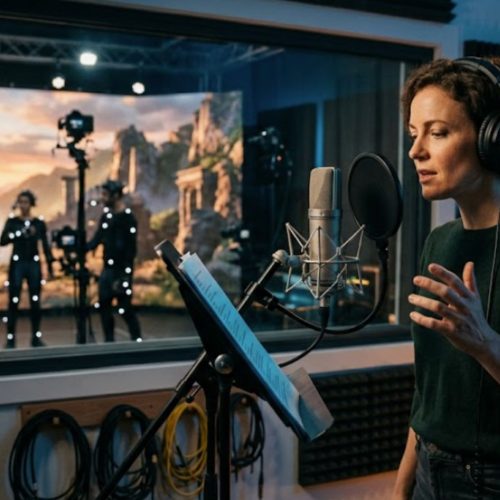
When we think of iconic performances, we often conjure images of expressive faces and sweeping cinematic landscapes. But some of the most profound acting in history happens in a soundproof booth, inches away from a pop filter, where the only tool available is the human voice. Voice acting is frequently misunderstood as “doing funny voices,” but the reality is a disciplined, psychological art form that requires a unique blend of technical mastery and raw vulnerability.
As the digital landscape evolves, the demand for vocal talent has exploded—from high-octane video games to immersive audiobooks. Yet, standing out in this crowded field requires more than just a “good” voice. It requires an understanding of what transforms a recording into a living, breathing character.
The Foundation: Acting Above All Else
The most common misconception in the industry is that a “radio voice” is a golden ticket. In reality, a beautiful timbre is just the packaging; the acting is the product. A great voice actor is, first and foremost, a great actor.
Unlike stage or screen performers, voice actors cannot rely on a raised eyebrow, a shrug, or a costume to convey subtext. Every ounce of emotion—grief, sarcasm, joy, or exhaustion—must be channeled through vocal cords alone. This requires a heightened sense of emotional intelligence. You aren’t just reading lines; you are inhabiting a psyche.
Professional performers often look to resources like Backstage, which emphasizes that the “voice” part of the job is secondary to the “acting.” If you can’t make a listener believe you are heartbroken while standing in your pajamas in a home studio, the most resonant bass in the world won’t save the performance.
The Technical Symphony: Control and Versatility
Beyond the emotional depth lies the grueling technical side of the craft. A great voice actor treats their body like a high-precision instrument. This involves:
- Breath Control: Managing air not just to finish a sentence, but to use “character breaths” that signal nervousness, excitement, or physical exertion.
- Diction and Enunciation: The ability to be crystal clear without sounding clinical. It’s about finding the balance between “natural speech” and “intelligible recording.”
- Consistency: This is the hallmark of a pro. If you are recording a 60-hour RPG, you must be able to recreate the exact pitch, rasp, and accent of a character six months after the initial session.
The Power of “The Internal Monologue”
What separates a “read” from a “performance” is the presence of an internal monologue. When a great voice actor speaks, they are reacting to an imaginary scene partner. They see the world the character sees.
In animation and gaming, this often requires “theatricality”—larger-than-life energy that still feels grounded in truth. In commercial work, it requires the “guy-next-door” authenticity that feels like a conversation over coffee. Achieving this versatility means having a deep “toolbox” of archetypes and the ability to pivot direction instantly when a booth director asks for “10% less corporate and 20% more whimsical.”
The Anatomy of a Performance
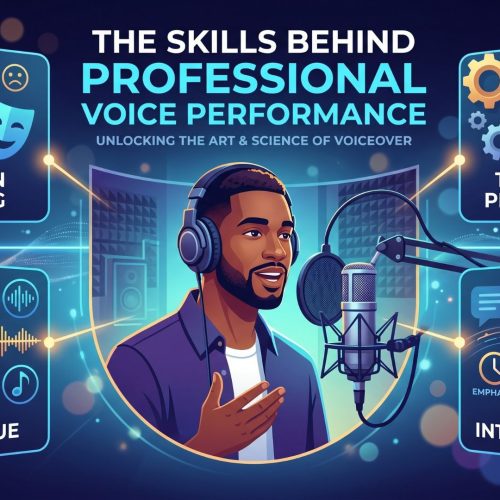
To better understand the layers involved, let’s look at the three pillars of a professional vocal profile:
| Pillar | Focus | The Goal |
| Placement | Where the sound resonates (chest, throat, nasal, or mask). | To change the “age” or “authority” of the character. |
| Tempo | The rhythm and cadence of speech. | To convey personality traits (e.g., fast/anxious vs. slow/calculating). |
| Texture | The “grit” or “smoothness” of the vocal folds. | To imply physical history (smoking, fatigue, or youth). |
Adaptation and the Modern Industry
The industry has shifted significantly toward self-direction. In the past, an actor would go to a studio and be guided by a team. Today, many performers are their own engineers, directors, and editors. A great voice actor in 2025 must understand the acoustics of their space and the nuances of their equipment.
However, technical specs don’t replace the need for professional development. Aspiring and seasoned talent alike often turn to Variety to track industry trends, such as the rise of AI in voice synthesis or the shift toward more diverse and authentic casting. Being “great” now includes being industry-savvy—knowing how to market a unique brand while remaining flexible enough to fit into a variety of projects.
The “Invisible” Skill: Listening
Perhaps the most underrated trait of a world-class voice actor is the ability to listen. This applies in two ways:
- Listening to Direction: Taking a cryptic note like “make it sound more like the color blue” and translating it into a vocal adjustment without ego.
- Listening to the Self: Monitoring one’s own performance in real-time to ensure the “theatrical” doesn’t become “caricature.”
Greatness in this field is found in the nuances—the tiny cracks in a voice during a confession, the subtle shift in rhythm during a realization, and the ability to make a script about insurance sound like a personal manifesto.
Final Thoughts
Ultimately, a great voice actor is a storyteller who works in the dark. They provide the heartbeat for characters that would otherwise be static pixels or ink on a page. It is a demanding, often solitary profession that requires the stamina of an athlete and the soul of a poet.
When you hear a voice that stops you in your tracks—whether it’s in a documentary, a cartoon, or a GPS navigation—you aren’t just hearing someone talk. You are hearing years of training, a mastery of breath, and the profound courage to be human through nothing but sound.…
0