Category Archive

Culture & Society

Decoding the Frame: Cultural Differences in Film Interpretation


Posted on January 6, 2026 by George
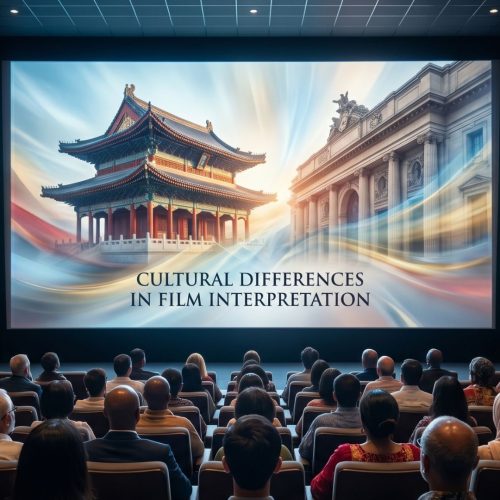
Cinema is often heralded as a “universal language,” yet the way audiences process a single scene can vary wildly across different latitudes. As we move further into 2026, the globalization of streaming platforms like Netflix and MUBI has made international cinema more accessible than ever, but it has also highlighted a fascinating psychological reality: our cultural “software” dictates how we interpret the moving image.

From the weight given to a character’s silence to the way we perceive narrative structure, cultural differences in film interpretation remain a cornerstone of modern media studies.

The Cultural Schema: How We “Read” a Movie

At the heart of film interpretation lies the concept of cultural schemas—mental frameworks that help us organize and interpret information based on our background. A study published in June 2024 explored this by analyzing how Hungarian and Jordanian students interpreted the same silent film (Sanatifar et al., 2024).

The researchers found that while both groups viewed the same visual stimuli, their written narratives diverged based on societal values. The Jordanian participants, coming from a more collectivist culture, frequently emphasized family bonds, societal expectations, and themes of gratitude. In contrast, the Hungarian students displayed more individualistic tendencies, focusing on the protagonist’s pursuit of autonomy and personal dreams (Sanatifar et al., 2024).

This suggests that we don’t just “watch” a movie; we subconsciously edit it to align with our own moral and social architecture. For a deep dive into how these perceptions are evolving in the digital age, the Frontiers in Communication journal provides ongoing research into how global connectivity is hybridizing these regional stories.

Narrative Structure and the “Pace” of Meaning

Western audiences, largely raised on the three-act structure of Hollywood, often expect a linear progression: a protagonist encounters a problem, faces obstacles, and reaches a resolution. However, Eastern cinematic traditions often utilize different narrative beats that can leave Western viewers feeling “lost.”

  • Kishōtenketsu: Common in Japanese and Chinese storytelling, this four-act structure lacks a central conflict. Instead, it relies on a “twist” or a change in perspective in the third act.
  • The Power of Silence: In many Asian cinemas, “ma” (the space between things) is as important as the dialogue. To a high-context culture, a long, silent shot of a character looking at a tea cup might convey profound grief. To a low-context Western viewer, the same shot might simply feel like “slow pacing.”

The Challenge of Translation and Localization

Interpretation is also heavily influenced by the technical bridge of audiovisual translation. Subtitling and dubbing are not merely linguistic tasks; they are acts of cultural mediation. The way a voice actor conveys emotion or how a translator adapts a joke can fundamentally change a viewer’s emotional connection to the material.

Understanding how language influences media experience is crucial for global distributors, as even a minor shift in tone during localization can alter the audience’s perception of a character’s morality or intent. Research into international film festivals has shown that “lexical gaps”—words or concepts that exist in one culture but not another—often require “cultural substitution.” For example, a subtitler might replace a specific religious idiom with a more general emotional phrase to ensure the international audience feels the same “impact,” even if the literal meaning is lost.

The “Globalized” Viewer of 2026

Is globalization making our interpretations more alike? According to the Global Cinema Federation’s 2026 survey, the answer is a complicated “yes and no.” While 73% of global audiences now see theatrical moviegoing as vital to their wellbeing, their preferences remain segmented (Box Office Pro, 2026).

Younger viewers (under 25) are increasingly adept at “code-switching” between different cultural aesthetics. They might enjoy the fast-paced “branded content” of Korean web dramas while simultaneously appreciating the slow, “transnational” narratives of European arthouse films (Al-Maliki, 2025). This “cinematic hybridity” is creating a new generation of viewers who can interpret multiple cultural “languages” at once.

For those interested in the industry’s shift toward these diverse audience appetites, Box Office Pro offers comprehensive data on how global theaters are adapting to these changing consumer behaviors.

Final Thoughts

As we look at the film slate for the remainder of 2026, it is clear that cinema remains a mirror of our diversity. Whether we are watching a Hollywood blockbuster or a minimalist drama from West Africa, we bring our entire history to the theater. Understanding these cultural differences doesn’t just make us better film critics; it makes us more empathetic participants in a global conversation.…


0
How Language Influences Media Experience


Posted on December 2, 2025 by George

Language is the fundamental architecture of human thought, but in the digital age, it has become the primary lens through which we consume, interpret, and internalize media. From the nuances of a subtitled foreign film to the localized marketing of a global brand, the linguistic framework of media doesn’t just transmit information—it shapes the very reality of the consumer. As we navigate an increasingly interconnected world, understanding the psychological and cultural impact of language on media experience is essential for both creators and audiences.


The Cognitive Filter: How Mother Tongue Shapes Perception

The relationship between language and thought is often discussed through the lens of linguistic relativity, or the Sapir-Whorf hypothesis. This theory suggests that the structure of a language affects its speakers’ worldviews or cognition. When applied to media, this means that an English speaker and a Mandarin speaker might watch the same visual news report but walk away with different emotional emphases based on how their respective languages categorize events.

For instance, languages that utilize “gendered” nouns can influence how audiences perceive inanimate objects in advertisements. In a study popularized by Scientific American, it was noted that speakers of languages like German or Spanish might describe a “bridge” as strong or elegant depending on whether the word is masculine or feminine in their native tongue. In media, this subconscious bias allows advertisers to tailor imagery that aligns with the linguistic instincts of their target demographic, creating a seamless, “natural” brand experience.


The Rise of the “Global English” and Cultural Homogenization

In the realm of entertainment—specifically Hollywood and streaming giants like Netflix—English has long been the lingua franca. While this allows for a massive global reach, it also creates a specific “media experience” that can marginalize local nuances. When a story is conceived in English and translated outward, the original cultural idioms and humor often lose their potency.

However, we are currently witnessing a “reverse flow.” The success of non-English media, such as South Korea’s Squid Game or Spain’s Money Heist, has forced global audiences to engage with foreign linguistic structures. This shift has sparked a renewed debate over Subtitles vs. Dubbing.

  • Subtitles preserve the original linguistic performance, allowing the viewer to experience the rhythm and “soul” of the source culture.
  • Dubbing provides a lower barrier to entry but often sanitizes the linguistic grit that makes a piece of media authentic.

As media becomes more accessible, the choice of language in translation isn’t just a technical one; it’s an aesthetic choice that dictates the level of immersion the viewer experiences.


Social Media and the Evolution of Digital Dialects

Perhaps the most profound influence of language on media experience is found in social media. We are no longer just passive consumers; we are active participants who use “Internet Slang” to signal belonging. Platforms like TikTok and X (formerly Twitter) have birthed their own dialects—blends of AAVE (African American Vernacular English), Gen Z shorthand, and emoji-based syntax.

This new linguistic frontier changes how we experience “the news.” A viral event isn’t just a headline; it’s a series of memes and linguistic “riffs” that redefine the event in real-time. According to research highlights from The New York Times, the way we use language on digital platforms actually rewires our social expectations, making us crave brevity, emotional immediacy, and “relatability” over formal accuracy.

The Power of Tone and Framing

In journalism, the influence of language is even more direct. The choice between calling a group “freedom fighters” versus “insurgents” completely alters the media experience of the reader. This is known as framing. By utilizing specific lexical choices, media outlets can trigger pre-existing schemas in the audience’s brain, leading them toward a specific moral or political conclusion without ever explicitly stating a bias.


Localization: The Art of Linguistic Adaptation

For global corporations, “translation” is a dirty word; the gold standard is localization. This is the process of adapting media to the linguistic and cultural requirements of a specific market. A video game released in Japan requires more than just Japanese text; it requires a shift in honorifics, tone, and sometimes even character motivations to resonate with the local “linguistic spirit.”

The media experience in this context becomes a mirror. When a consumer sees their own local dialect, slang, or cultural references reflected in high-production media, it validates their identity. This deep connection is further explored in Decoding the Frame: Cultural Differences in Film Interpretation, which examines how these cultural frameworks dictate how we perceive narrative stakes and character motivations. Conversely, poor localization creates a “jarring” experience that reminds the consumer of their status as an outsider to the content’s origin.


The Future: AI and Real-Time Linguistic Synthesis

As we look toward the future, Artificial Intelligence is set to revolutionize the linguistic media experience. We are approaching a point where real-time, AI-driven dubbing can match the lip movements of an actor to a translated language perfectly. While this solves the “immersion” problem of traditional dubbing, it raises ethical questions about the loss of the original vocal performance.

If language defines the media experience, then an AI that can fluidly swap languages might eventually create a “universal” media culture. Yet, there is a risk that the unique “flavor” of local languages—the untranslatable words like the Portuguese saudade or the Japanese komorebi—will be smoothed over in favor of a computerized, “perfect” middle ground.


Conclusion

Language is not merely a tool for communication; it is the very fabric of the media experience. It dictates what we notice, how we feel, and how we identify with the stories told on our screens. Whether through the global dominance of English, the tribal dialects of social media, or the intricate art of localization, the words we use determine the world we see.

As consumers, being aware of how language influences our media consumption allows us to look past the “frame” and appreciate the vast, diverse tapestry of human expression. In a world that is talking more than ever, the most important skill might just be understanding how those words are shaping our minds.…


0