
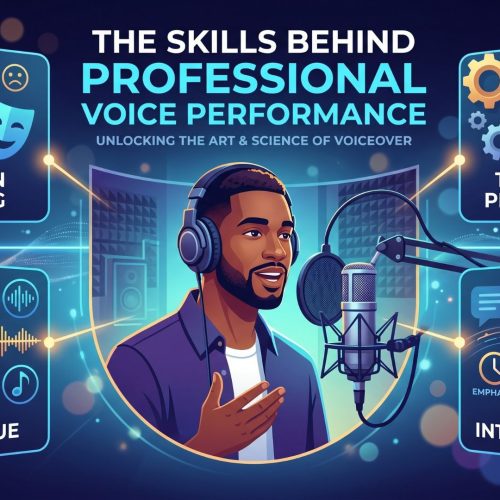
In the modern media landscape, the human voice is more than just a tool for communication; it is a sophisticated instrument that carries the weight of multimillion-dollar franchises, corporate identities, and emotional narratives. While the casual observer might think professional voice work is as simple as “talking for a living,” the reality is a disciplined blend of athletic control, psychological depth, and technical mastery. To understand the world of professional voice performance, one must look beyond the microphone and into the rigorous skill set that separates the amateur from the elite.
The Foundation: Vocal Health and Breath Control
At the core of every great performance is physical conditioning. A voice actor is, in many ways, a “vocal athlete.” Without proper maintenance, the instrument can fail, leading to vocal nodules or chronic fatigue.
Diaphragmatic Support
Unlike casual speech, professional performance requires diaphragmatic breathing. This technique allows the performer to sustain long sentences without gasping for air and provides the “power” behind the voice without straining the vocal cords.
Vocal Versatility and Range
A professional must be able to manipulate their resonance—shifting the sound from the deep, authoritative “chest voice” to the lighter, more agile “head voice.” This isn’t just about pitch; it’s about the texture and timbre of the sound. Protecting this range requires a strict regimen of hydration, warm-ups, and an understanding of one’s own physical limits. According to The New York Times, the demands on voice actors in industries like gaming have reached an all-time high, often requiring “vocal stress” sessions that involve hours of screaming or guttural noises, making recovery protocols more essential than ever.
Acting is Reacting: The Psychological Layer
The most common misconception in the industry is that a “good voice” is enough. In reality, “voice acting” is 10% voice and 90% acting. A performer must be able to inhabit a character or a brand’s persona instantly, often with zero visual cues.
Script Analysis and Subtext
When a performer receives a script, they aren’t just looking at words. They are looking for the objective.
- What does the character want?
- Who are they speaking to?
- What happened five minutes before this scene?
Professional performers use subtext to give a line meaning. A simple phrase like “I’m fine” can be delivered in a thousand ways—dripping with sarcasm, whispered in fear, or barked in anger. This ability to read between the lines is what creates a “three-dimensional” performance that resonates with an audience.
Cold Reading
In the fast-paced world of commercial VO (Voice Over), actors often have seconds to look at a script before the record light goes on. The skill of cold reading—processing the text ahead of the mouth while maintaining a natural, conversational flow—is a hallmark of a seasoned pro.
The Technical Precision of the Booth
A voice actor’s workspace is a highly controlled environment where the slightest movement can ruin a take. Mastery of the technical side of the booth is just as important as the emotional delivery.
Microphone Technique
Different microphones have different “sweet spots.” A professional knows how to manage the proximity effect—a phenomenon where the lower frequencies of the voice are emphasized as the speaker gets closer to the mic.
- For intimate narrations: The actor might move within two inches of the diaphragm.
- For high-energy shouting: They must “back off” the mic to avoid clipping the audio signal.
The Art of “Non-Verbal” Sounds
In animation and video games, much of the work involves “efforts”—the grunts, sighs, breaths, and death rattles that make a character feel physical. Executing these without damaging the throat requires specialized training in vocal placement.
Adaptability and Direction
Perhaps the most underrated skill in the industry is the ability to take direction. A producer might ask for a “blue” sound or tell an actor to be “20% less corporate.”
The “Internal Dial”
Top-tier performers have an internal dial. If a director says, “That was great, but give me more smile in the voice,” the actor must know how to physically alter their facial expression to change the acoustic brightens of their tone without losing the character’s core.
This level of professional agility is why many actors transition into the field from theater or film. As noted by The Hollywood Reporter, the convergence of A-list talent and traditional voice actors has raised the bar for performance standards, turning the recording booth into a space as competitive and creatively demanding as any film set.
Conclusion: The Invisible Art
The hallmark of a truly skilled voice performer is invisibility. When we hear a documentary narrator, we shouldn’t be thinking about their breathing; we should be immersed in the history. When we play a video game, we shouldn’t hear an actor in a booth; we should hear a hero in a battle.
Professional voice performance is the intersection of biological maintenance, deep emotional intelligence, and technical savvy. It is an art form that is heard but rarely seen—and it is the invisible glue that holds our modern digital experiences together. As the industry evolves with new technologies, these core human skills remain the irreplaceable foundation of great storytelling.