
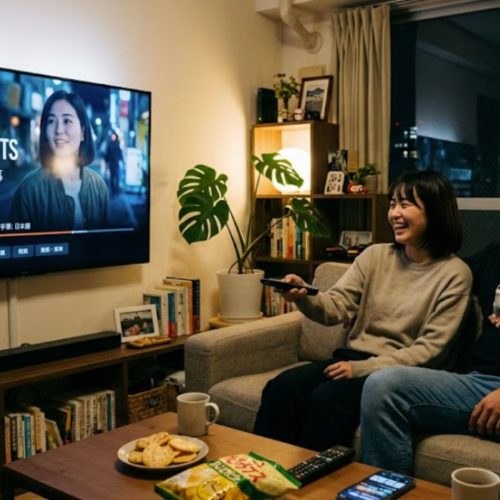
In the current era of digital borderlessness, the phrase “content is king” has undergone a necessary evolution. For global streaming giants, content is only king if the audience can actually understand, relate to, and immerse themselves in it. As platforms like Netflix, Disney+, and Amazon Prime Video expand into every corner of the globe, the focus has shifted from mere distribution to deep localization.
Localization is no longer just a “hot topic”—it is the primary engine of growth in a saturated market. It is the difference between a platform being a foreign visitor in a local market and becoming a household staple.
Beyond the Subtitle: Defining Modern Localization
To the casual viewer, localization might seem like a simple choice between subtitles or dubbing. However, for a streaming service aiming for global dominance, the process is far more surgical. It involves adapting a product’s linguistic, cultural, and technical elements to meet the specific needs of a target market.
This includes:
- Cultural Nuance: Adjusting humor, idioms, and social references that don’t translate literally.
- User Interface (UI) Adaptation: Ensuring the app layout handles different character sets (like Arabic or Kanji) and reading directions.
- Local Original Content: Producing shows within a country, using local talent and stories, rather than just exporting Hollywood hits.
As noted by industry analysts at Variety, the shift toward local-language originals has fundamentally altered the competitive landscape, forcing US-based streamers to think like local broadcasters in every territory they enter.
The “Squid Game” Effect: Breaking the Language Barrier
Perhaps the most significant turning point for localization was the meteoric rise of the South Korean series Squid Game. Its success proved a vital hypothesis: global audiences are willing to consume non-English content if the emotional beats are universal and the localization is high-quality.
When a platform invests in high-end dubbing—using voice actors who capture the emotional grit of the original performance—the “barrier” of language disappears. This has led to a “glocalization” strategy: creating content for a specific local market that possesses the high production value and universal themes required to travel globally.
Cultural Relevance as a Retention Tool
In the streaming wars, customer acquisition is expensive, but “churn” (users canceling their subscriptions) is the silent killer. Localization is a powerful tool for retention. When a user in Brazil or India opens their streaming app and sees a curated homepage featuring local holidays, regional dialects, and familiar faces, they feel a sense of ownership over the platform.
If a platform feels “too American” or “too Western,” it remains a luxury add-on. But when it invests in local storytelling, it becomes an essential part of the cultural conversation. This is why we see streaming services investing billions into production hubs in Madrid, Seoul, and Mumbai. They aren’t just translating stories; they are building local creative ecosystems.
The Technical Challenges of Going Global
Localization is as much a feat of engineering as it is of linguistics. One of the most overlooked aspects is Metadata Localization. For a search algorithm to work effectively in a foreign country, the tags, descriptions, and titles must be optimized for how local users actually type and speak.
Furthermore, technical infrastructure must account for local realities. In many emerging markets, high-speed fiber isn’t a guarantee. Effective localization includes “lite” versions of apps that function on lower-end devices or offer robust offline viewing options—a necessity in regions where data costs are high and connectivity is intermittent.
According to insights from The Hollywood Reporter, the infrastructure behind global delivery—ranging from cloud-based dubbing workflows to AI-assisted subtitling—is now just as important as the A-list talent appearing on screen.
The Role of AI in Scaling Localization
As of 2025, Artificial Intelligence has become the “secret sauce” for scaling these efforts. While human translators are essential for creative nuances and “cultural “vibe checks,” AI helps manage the sheer volume of content.
- AI Dubbing: New technologies allow for “voice cloning” where the original actor’s voice can be synthetically recreated in another language, maintaining the same timbre and emotional inflection.
- Lip-Sync Tech: Generative AI is being used to subtly alter the mouth movements of actors on screen to match the phonemes of the dubbed language, reducing the “uncanny valley” effect that often distracts viewers of dubbed content.
However, the industry remains cautious. The goal is to use AI to handle the “heavy lifting” of literal translation while leaving the artistic soul of the dialogue to human writers who understand the slang of a Tokyo street or the sarcasm of a Parisian café.
The Economic Imperative
The math is simple: the North American market is reaching a point of “peak streaming.” For a company to show growth to its shareholders, it must look to the “Next Billion” users in Southeast Asia, Africa, and Latin America.
These users are not interested in a one-size-fits-all catalog. They want to see their lives reflected on screen. Localization, therefore, isn’t just a polite gesture of inclusivity; it is a hard-nosed economic necessity. Platforms that fail to localize properly find themselves relegated to a niche status, while those that embrace local cultures find themselves at the top of the charts.
Conclusion: The Future is Hyper-Local
The future of global streaming is paradoxically local. We are moving toward a world where a teenager in Lagos, a retiree in Berlin, and a student in New York can all watch the same show on the day of release, each experiencing it in a way that feels native to them.
Localization has matured from a post-production afterthought into a core pillar of development. By respecting the nuances of language and the depth of cultural identity, global streaming platforms are doing more than just selling subscriptions—they are facilitating a global cultural exchange that was once unimaginable. In 2025 and beyond, the streamers that win won’t be the ones with the loudest voices, but the ones that speak the most languages fluently.